Brandt-Daroff exercises
Simple exercises to do at home when you have positional vertigo (BPPV). They help move the crystals in the inner ear and help the brain adapt, reducing dizziness and unsteadiness.
What are they for?
Brandt-Daroff exercises are a series of position changes you can do at home, on your bed. They are used for benign paroxysmal positional vertigo (BPPV) and have two effects:
- They help move the crystals that have slipped into the balance canals.
- They train the brain to get used to the movement, so dizziness and unsteadiness gradually decrease.
They are a complement. To cure BPPV, the repositioning manoeuvre done in clinic (such as the Epley manoeuvre) is more effective. The exercises are useful when some unsteadiness remains after the manoeuvre, when the manoeuvre cannot be done, or to manage relapses, as long as your doctor has recommended them.
Before you start
- Only do them if you have been diagnosed with BPPV. Not all vertigo is the same.
- Sit in the middle of a wide bed, with room to lie down on either side.
- The first few times, ask someone to be with you.
- Feeling dizzy during the exercises is normal. That is exactly the point: the vertigo should get milder day by day.
- If you have neck or back problems, talk to your doctor first.
- When you finish, stay seated for a few minutes before standing up, and do not drive straight afterwards.
How to do them
-
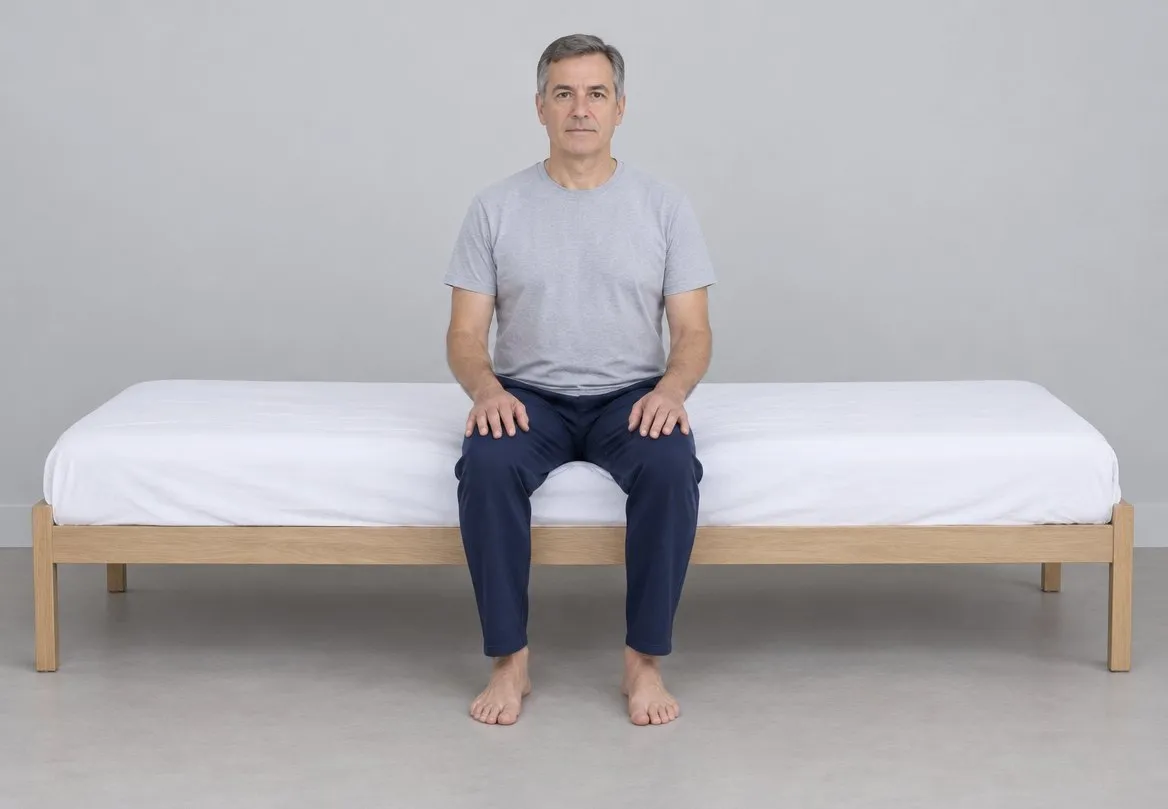
Position 1
Sit in the middle of the edge of the bed, feet on the floor, looking straight ahead.
-
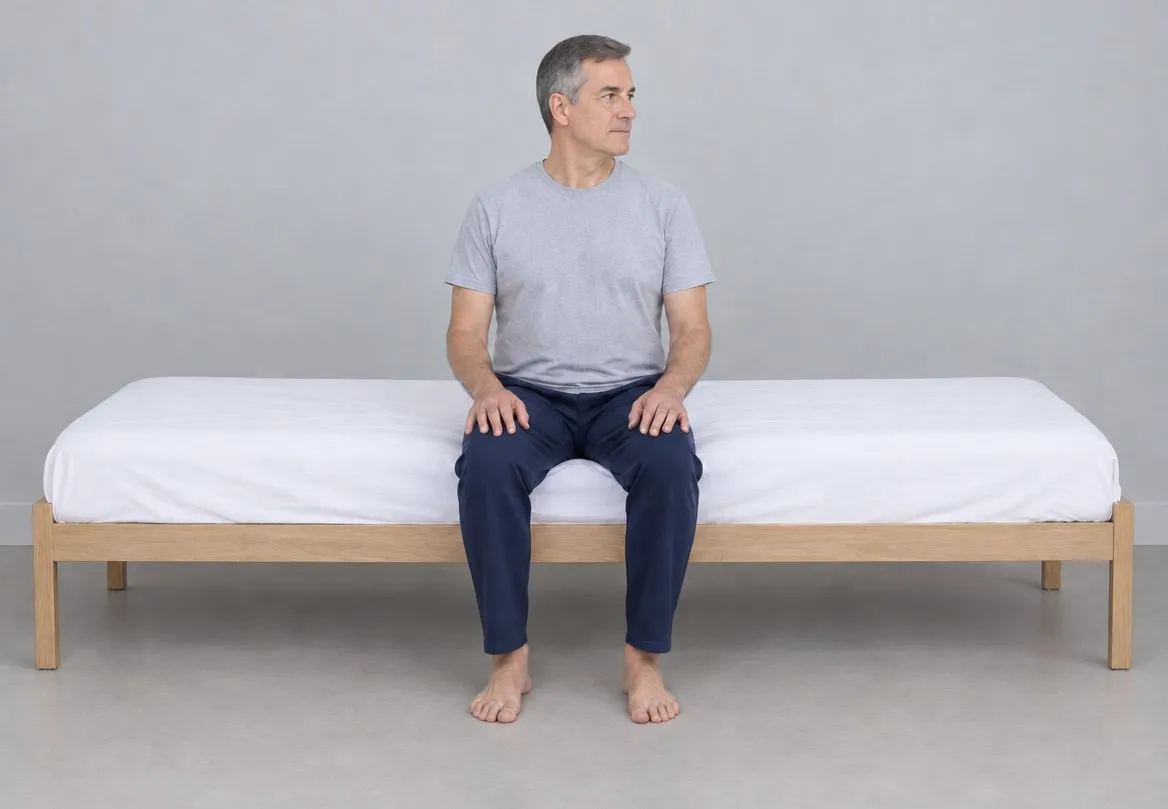
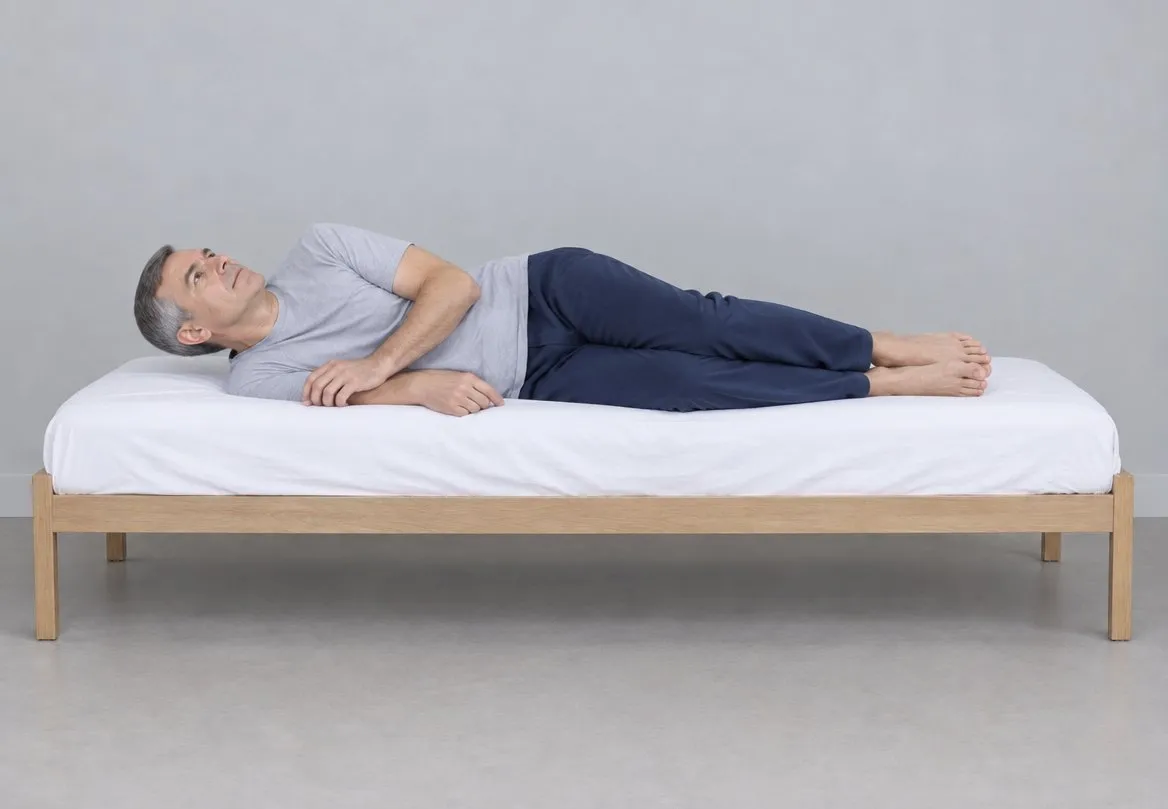
Position 2
Turn your head 45° to the left and, keeping it turned, quickly lie down on your right side. Your face ends up looking diagonally at the ceiling.
-
Position 3
Sit back up and look straight ahead.
-
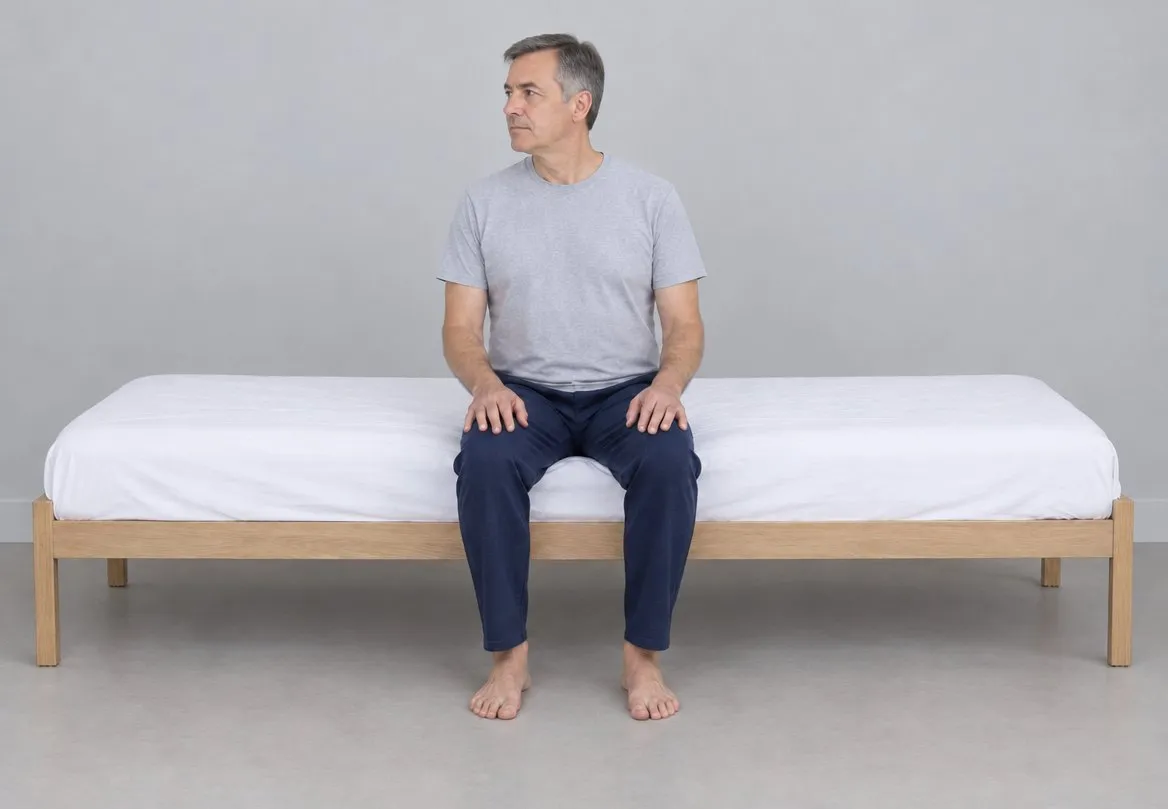
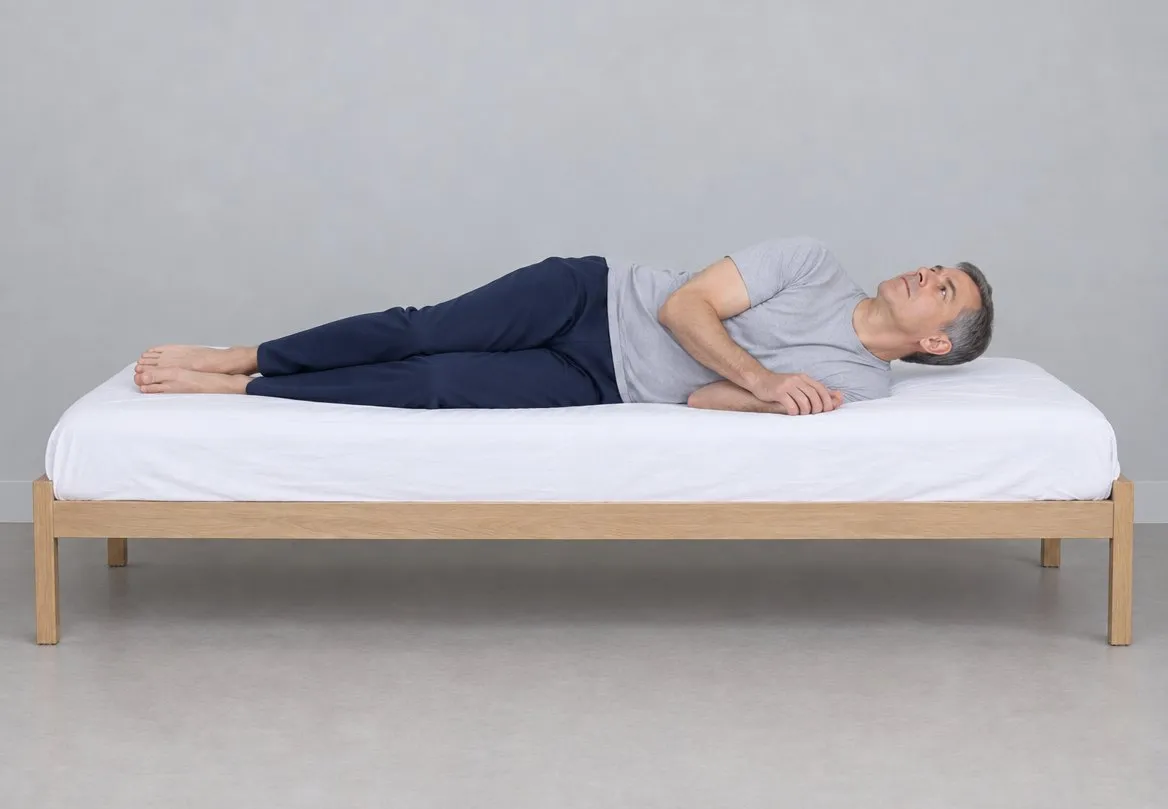
Position 4
Turn your head 45° to the right and quickly lie down on your left side, looking diagonally at the ceiling.
-
Position 5
Sit back up and look straight ahead. That completes one cycle.
Routine
| Item | Instruction |
|---|---|
| Time in each position | 30 seconds, or until the vertigo stops if it lasts longer |
| Repetitions per session | 5 full cycles (5 times to each side), about 10 minutes |
| Sessions | 3 times a day: morning, midday and evening |
| Duration | 2 weeks, or until you have gone 2 days in a row without vertigo |
This is the classic routine described by Brandt and Daroff. Always follow the one your doctor has given you, which may differ.
Demonstration video
If it helps to see it, you can watch this video of the Brandt-Daroff exercises on YouTube. It is external content, not produced by Atlas ENT.
What is normal and when to seek advice
It is normal to:
- feel vertigo or nausea during the first days, especially when lying towards the affected side;
- find the symptoms get milder as the days go by.
Stop the exercises and seek advice if:
- you have severe vomiting or the vertigo gets worse;
- you notice no improvement after two weeks;
- new symptoms appear, such as a severe headache, double vision, difficulty speaking, weakness or tingling on one side of the body, or sudden hearing loss. In that case call 112 (in Spain) or your local emergency number, or go to the emergency department.
References
- Brandt T, Daroff RB. Physical therapy for benign paroxysmal positional vertigo. Arch Otolaryngol. 1980;106(8):484-485.
- Bhattacharyya N, et al. Clinical Practice Guideline: Benign Paroxysmal Positional Vertigo (Update). Otolaryngol Head Neck Surg. 2017;156(3 Suppl):S1-S47.
- Alkhalefah F, et al. Epley-type maneuvers versus Brandt-Daroff exercises for posterior-canal BPPV: a systematic review and meta-analysis. Cureus. 2026;18(7):e112282.
For general information only. It does not replace a medical consultation and cannot be used for diagnosis. In an emergency in Spain, call 112.